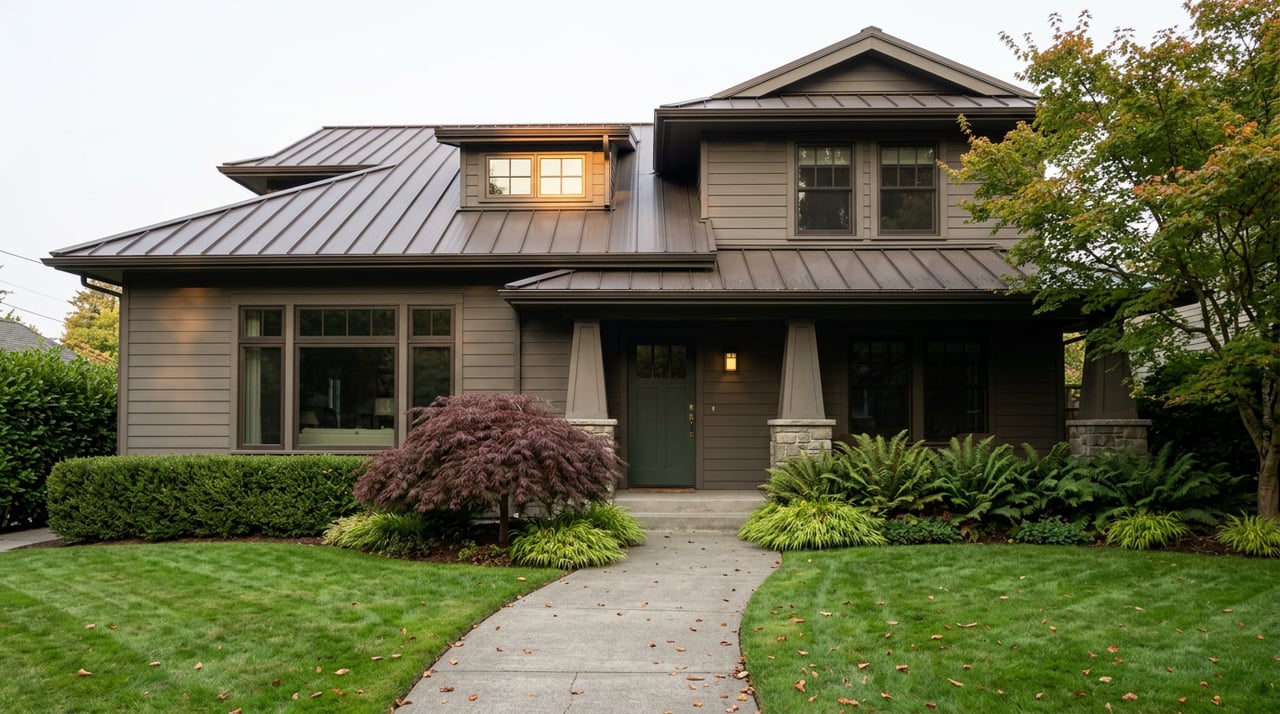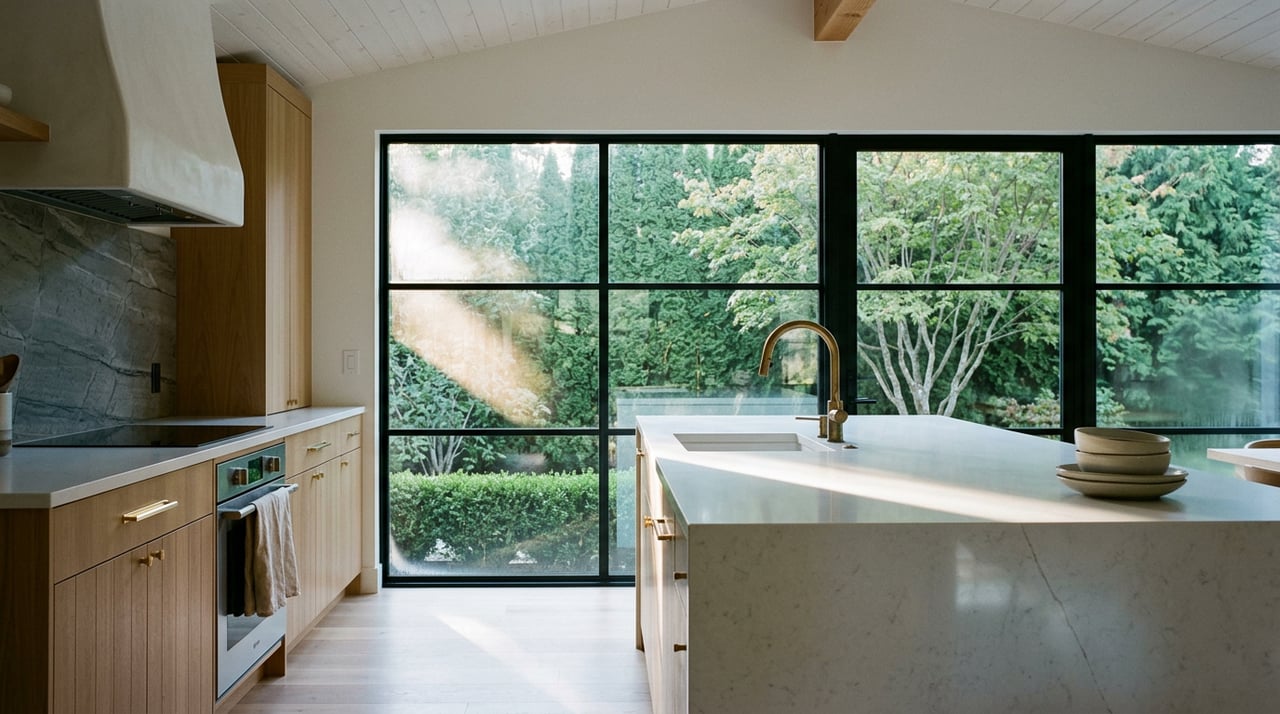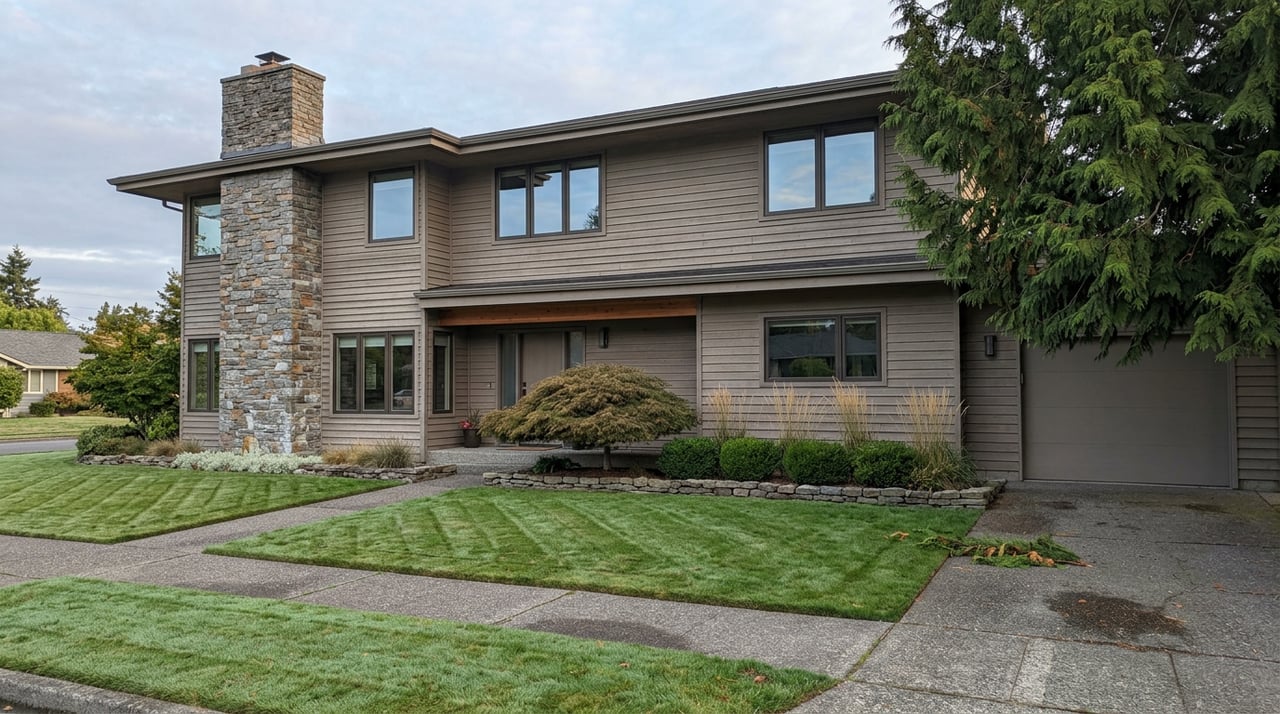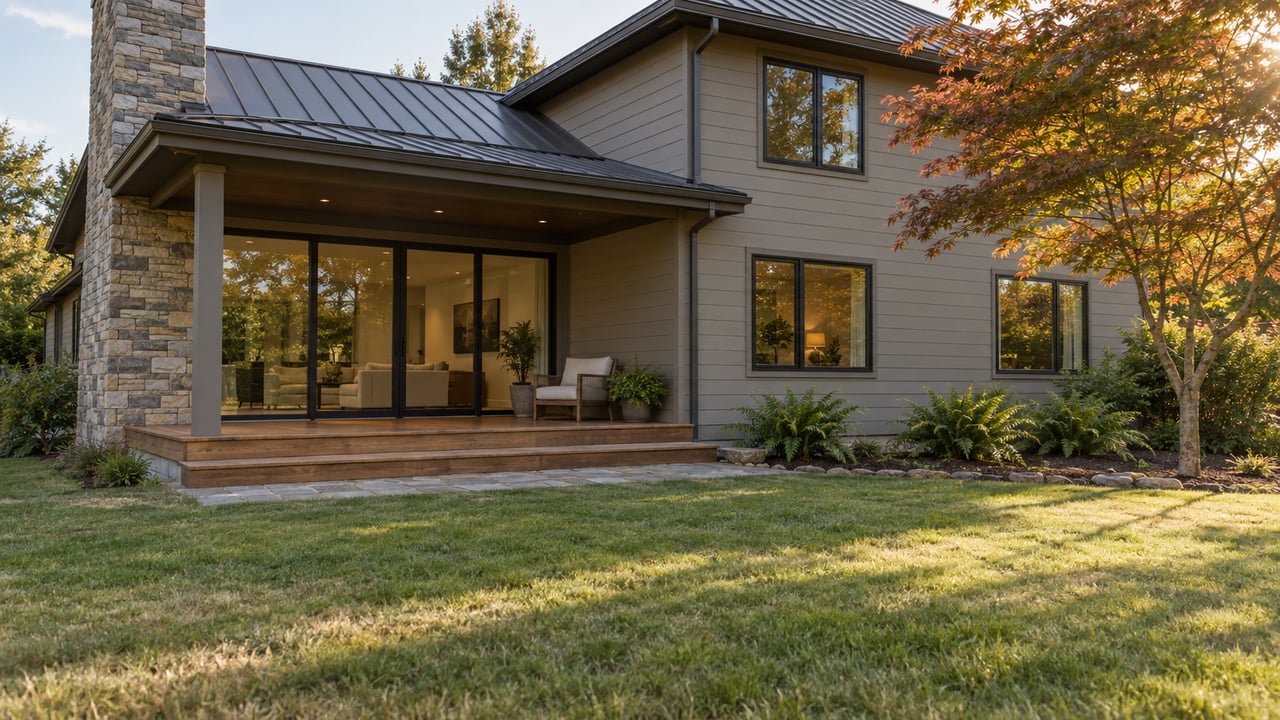
Pull up two Felida listings a half-mile apart and they can read like they belong to different towns. One is a quarter-acre lot near Ashley Pointe listed in the $300,000s. The other, a few streets over toward Lake River, tops $1.8 million. Both carry the same zip code. Both say Felida. Neither listing sheet tells you why the gap exists, because the reason isn't square footage or finish level. It's what's underneath the property, and who is legally responsible for it.
Felida isn't a city. It's a Census-Designated Place, which means it has no city council, no city permitting office, and no single set of utility rules governing every address inside it. Clark County runs the show for zoning, building permits, and land-use approval here, not the City of Vancouver next door. That single fact splits Felida into utility tiers that a buyer touring homes on a Saturday afternoon has no easy way to see.
The sewer line has an edge, and Felida sits on it
Most of core Felida, the platted subdivisions built from the 1990s into the late 2010s, run on public sewer through the Clark Regional Wastewater District. CRWWD's own service area description puts Felida at the literal western edge of its territory, which runs more than ten miles east from Felida to Brush Prairie and Orchards, and separately more than ten miles north from Hazel Dell to the City of Ridgefield, with additional rural centers served near Battle Ground. That's a 47-square-mile service area covering roughly 100,000 people, and Felida sits at the edge of it, not the center.
Being at the edge matters. It means the closer a parcel sits to the platted neighborhoods (Ashley Heights, Ashley Ridge, Ashley Pointe, Erickson Farms, Felida Overlook, Felida Manor), the more likely it connects to that public sewer main. It also means the acreage parcels further out toward Lake River and the Columbia River bluffs, the kind marketed as West Felida or gated estate lots, are exactly where private well and septic systems still show up. Clark Public Utilities handles electric almost everywhere in Felida. Water and sewage do not follow the same map.
None of this shows up in a standard IDX listing. Septic capacity and well status aren't required fields on the disclosure most buyers see when they're comparing homes online, which means the difference between a $600,000 sewer-connected colonial and a $1.5 million well-and-septic estate can look, on paper, like nothing more than lot size.
What the price range is actually telling you
Look at what's sold or listed across Felida's named subdivisions in recent months and the range stops looking random. A buildable lot in Ashley Pointe listed at $349,500. A few doors down, a finished home in Felida-Starcrest at $799,900. Move toward Lake River Estates and a 3,300-square-foot home lists at $1.15 million. A short distance away, near the gated, wooded lots of the Reserve at Ashley Ridge, a 7-bedroom, 8,400-square-foot home in Lake River Estates listed at $1,695,000. Another Felida address, a 5,195-square-foot custom build, listed at $1,850,000.
Square footage explains part of that spread. It doesn't explain all of it. A 3,200-square-foot Ashley Ridge home built in 2016 on a platted, sewer-connected lot competes in a different financing and inspection category than a similarly sized home a mile away on well water and a septic tank, even when the listing photos look interchangeable. Lenders scrutinize well and septic parcels more closely, and appraisers price in the cost of maintaining and eventually replacing a private system, something a septic contractor serving the area puts at $5,000 to $25,000 depending on soil conditions and tank size.
That's not a knock on the acreage side of Felida. Buyers who want privacy, larger lots, and direct water access, the kind Reserve at Lake River markets with its half-acre to one-acre parcels and Lake River frontage, are choosing a different tradeoff on purpose. The problem isn't the tradeoff. It's that most portal-based house hunting doesn't tell you it exists until you're deep into a purchase agreement.
The county line does more than decide who fixes the sewer
Jurisdiction affects more than plumbing. Because Felida sits in unincorporated Clark County rather than inside Vancouver's city limits, property tax levy rates follow county schedules, not city ones. Building permits, additions, accessory structures, even land-use changes on a larger parcel, route through Clark County's Title 40 unified development code rather than a city planning department. The county raised its land-use and wetland-habitat review fees effective January 1, 2026, a small but real reminder that permitting in unincorporated Felida isn't free and isn't identical to permitting a few miles south inside Vancouver.
For most buyers closing on an existing single-family home, this distinction stays in the background. It becomes immediately relevant the moment someone wants to add a shop, subdivide a larger lot, or confirm what they're actually allowed to build on land that looked, from the street, like ordinary suburban acreage.
What to check before you fall for a listing
The fix here isn't complicated, but it does require asking a question most buyers don't think to ask until an inspector raises it. Before writing an offer on a Felida property, especially anything on a lot larger than a standard platted quarter-acre:
- Ask directly whether the property is on public sewer through Clark Regional Wastewater District or on a private septic system, and get it in writing rather than assuming from the listing photos.
- If there's a septic system, request the county's on-site septic records for that address through Clark County Public Health, which maintains inspection and permitting history for private systems.
- Check whether the parcel has a private well by requesting water rights and well log documentation, since this affects both financing and ongoing maintenance costs.
- If you're financing with a conventional, FHA, or VA loan, confirm with your lender early whether a well-and-septic property triggers additional appraisal requirements, since not every loan program treats private systems identically.
- For any renovation or accessory structure plans, verify with Clark County's land-use department, not the City of Vancouver, since Felida's jurisdiction runs through the county.
Clark County Public Health is the right first call for any Felida parcel, since it holds the septic and well records regardless of which subdivision or builder marketed the home.
A few common questions
Does every Felida address have a septic tank? No. Most of the platted, named subdivisions built from the 1990s onward, places like Ashley Heights, Ashley Ridge, and Erickson Farms, connect to public sewer through Clark Regional Wastewater District. Septic and private well systems tend to show up on larger, older, or more remote parcels, particularly toward the Lake River and Columbia River side of the neighborhood.
Is Felida technically part of Vancouver? It's often described as a Vancouver-area neighborhood because of its proximity and shared zip codes, but Felida is an unincorporated Census-Designated Place governed by Clark County, not the City of Vancouver. That distinction affects permitting, zoning, and property tax levy rates.
Does a septic system automatically mean a lower offer? Not automatically, but it does change the due diligence timeline and the lender conversation. Well-and-septic properties often carry additional appraisal scrutiny and inspection costs that a sewer-connected home in the same price range won't require.
If you're comparing a Felida listing against something in Ridgefield, Vancouver proper, or elsewhere in Clark County and the price-per-square-foot math isn't adding up the way the portals suggest it should, that's usually the reason. The Pettet Group walks buyers through exactly which side of Felida's utility and jurisdiction line a specific address falls on before an offer goes in, not after. Let's connect and go through it together.